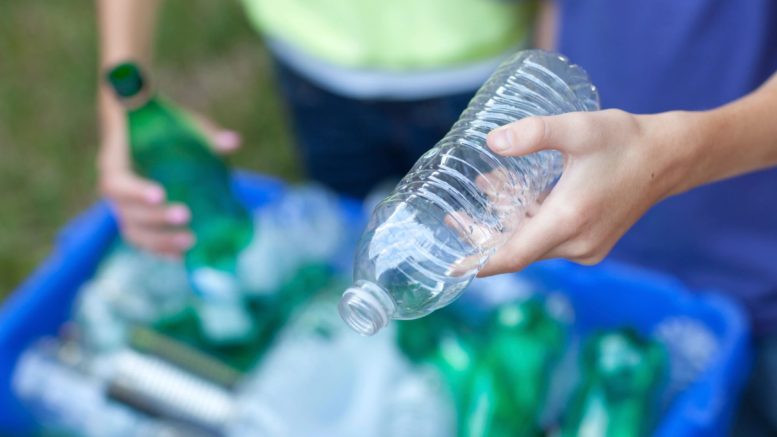
How Regions are Supporting Recycling in an Increasingly Challenging Market
As the cost of recycling is escalating for many local governments, regional councils are working toward solutions.
As the cost of recycling is escalating for many local governments, regional councils are working toward solutions.

Tracking Greenhouse Gas (GHG) emissions and mitigation efforts is no easy task. Accurate data collection may require decades worth of data points and many seemingly noncontributing factors may skew results. Contribution Analysis tools can help regions in their GHG inventory efforts.

August is National Water Quality Month, a perfect time to take a look at some of the ways that regions can use the Clean Water State Revolving Fund (CWSRF) and Drinking Water State Revolving Fund (DWSRF) to support local water infrastructure improvements.

Many of NARC’s members are acting as regional partners to combat major flooding through a complex consortium of stormwater user fees and taxes, green infrastructure, zoning regulations, long-term stormwater designs, and flood risk mapping tools.

After more than a year of negotiations, the Senate appears to have moved closer to an agreement on disaster funding for Puerto Rico, Florida, and California.

Happy Earth Day! Regional councils across the country are celebrating today by spreading information on environmental issues and earth-friendly activities – like bicycle commuting!

On March 6th, House Transportation and Infrastructure Committee Chair Peter DeFazio introduced the Water Quality Protection and Job Creation Act of 2019 (H.R. 1497), which would reauthorize the Clean Water State Revolving Fund (CWSRF) program. The following day, the Transportation and Infrastructure Committee’s Water Subcommittee discussed CWSRF reauthorization in a hearing titled “The Clean Water

The Environmental Protection Agency (EPA) and Army Corps of Engineers have officially released a revised definition of “Waters of the United States” (WOTUS) which determines the scope of federal regulation under the Clean Water Act (CWA). The comment period for the revision will be open until April 15, 2019. The revised definition and comment submission
In 2018, NARC advocated on your behalf on Capitol Hill and with the Administration, fostered innovative partnerships between members and with national organizations, and highlighted your daily successes. With active support from members like you, NARC has fostered better connections between members, increased our programming, and expanded our scope throughout the country. The political landscape

On November 14th, NARC staff attended Metropolitan Washington Council of Governments’ (MWCOG) most recent Climate, Energy, and Environment Policy Committee meeting at MWCOG offices. The Committee met to celebrate ten years of climate action since MWCOG adopted their regional program on climate change in 2008. Additionally, Dr. James Kinter, Director of the Center for Ocean-Land-Atmosphere